
1884
The decision to reconstruct the fourth year of the Whitechapel Fine Art Loan Exhibitions may seem idiosyncratic. Why not the first year, 1881? Or the last year, 1898? Or the year with the highest number of visitors, 1892?
First of all, 1884 was an inflection point in a decade of social change and crisis in Great Britain. The headline, so to speak, was the Representation of the People Act of 1884 (also known as the Third Reform Act), which extended voting rights from urban to rural areas and thus expanded the electorate to approximately two-thirds of English men, two-fifths of Scottish men, and one-half of Irish men; which established a uniform franchise system across the country; and which was followed by the Redistribution Act of 1885 whereby constituencies were redrawn to equalize representation across the country. Within four years, labor was organizing in East London with the Match Girls’s Strike in 1888 and the Dockworkers’s Strike in 1889. Four years later, in 1893, the Independent Labour Party was formed.
Second of all, William Morris delivered the opening lecture for the fourth Exhibition on April 8, 1884. The lecture (which is in the British Library and now available in a volume edited by Florence Boos) addressed the prospects for social revolution. ‘What must be done before we can meet before a wall covered with pictures on an equality’? That is the challenge Morris laid down to the largely middle- and upper-class audience at the preview day. Whereas he commended the display of beauty and imagination to ‘a set of people much in need of such instruction,’ he insisted it could not conceal the loss of ‘a manly reverence for the life of man past, and present, and to come.’ And whereas the loss was ‘a grievous one,’ he warned ‘the system of commercial competition…oppresses us all in reality but to some of us it shows in its real form of a curse and a tyranny.’
The Archives
1884 At the Whitechapel Exhibition draws upon archival sources from the London Archives, the British Library, the Whitechapel Gallery Archive, and also the public domain. Some of these sources are from 1884 and others are from the broader cycle of the Exhibitions; together, they serve as something like foundation stones for the reconstruction of the 1884 exhibition. The key sources, with 'explainers,' are as follows:
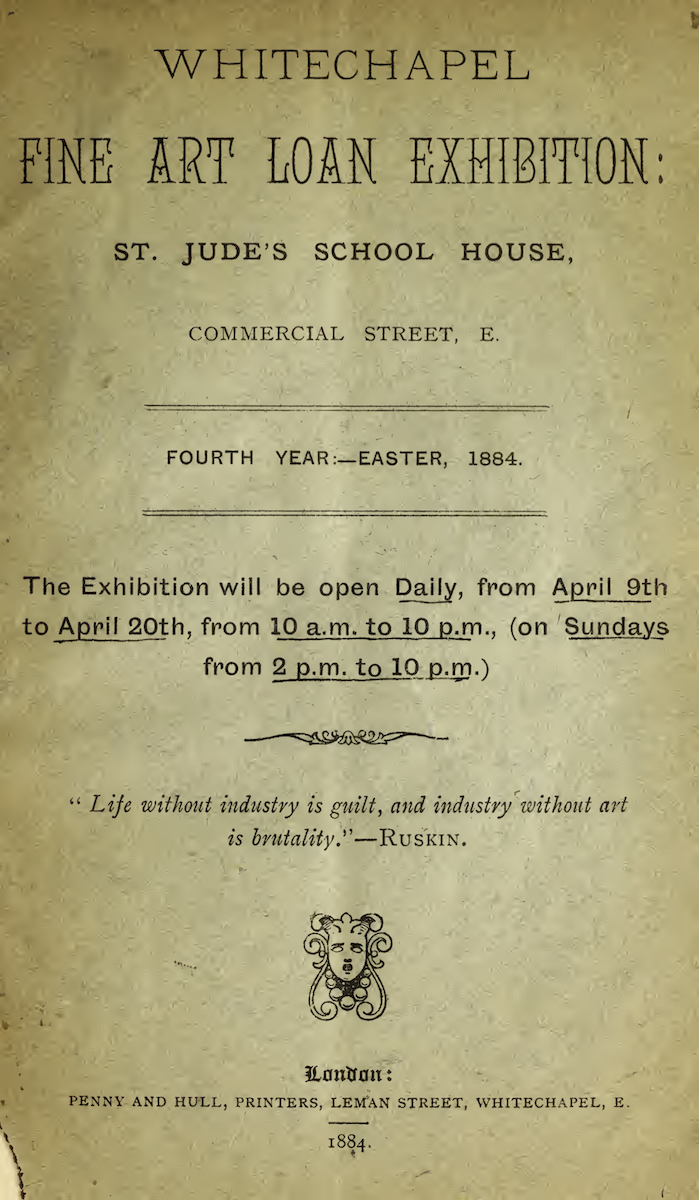
The descriptive catalog, which listed the paintings on show and offered interpretations, some literal, others with literary references. It was written by Henrietta and Samuel Barnett and volunteers including Edward T. and Emily Cook, and Pauline Townsend, and it sold for one penny. Because it was written at the last minute, there were mistakes. In the 1884 catalog, for example, 230 paintings were listed when, in fact, 235 paintings were on display.
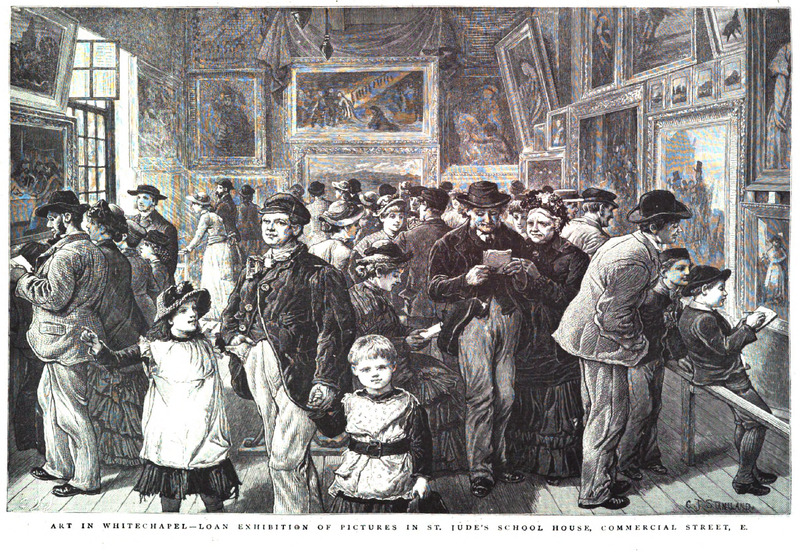
'Art in Whitechapel,' from a drawing by Charles Joseph Stanilad in The Graphic, XXX.782 (22 November 1884), was the inspiration for the 3D gallery. It offers a rare view of the 1884 Exhibition: a room, crowded with people and paintings, the paintings hung somewhat precariously and the people, of different classes and generations, in various positions of looking.
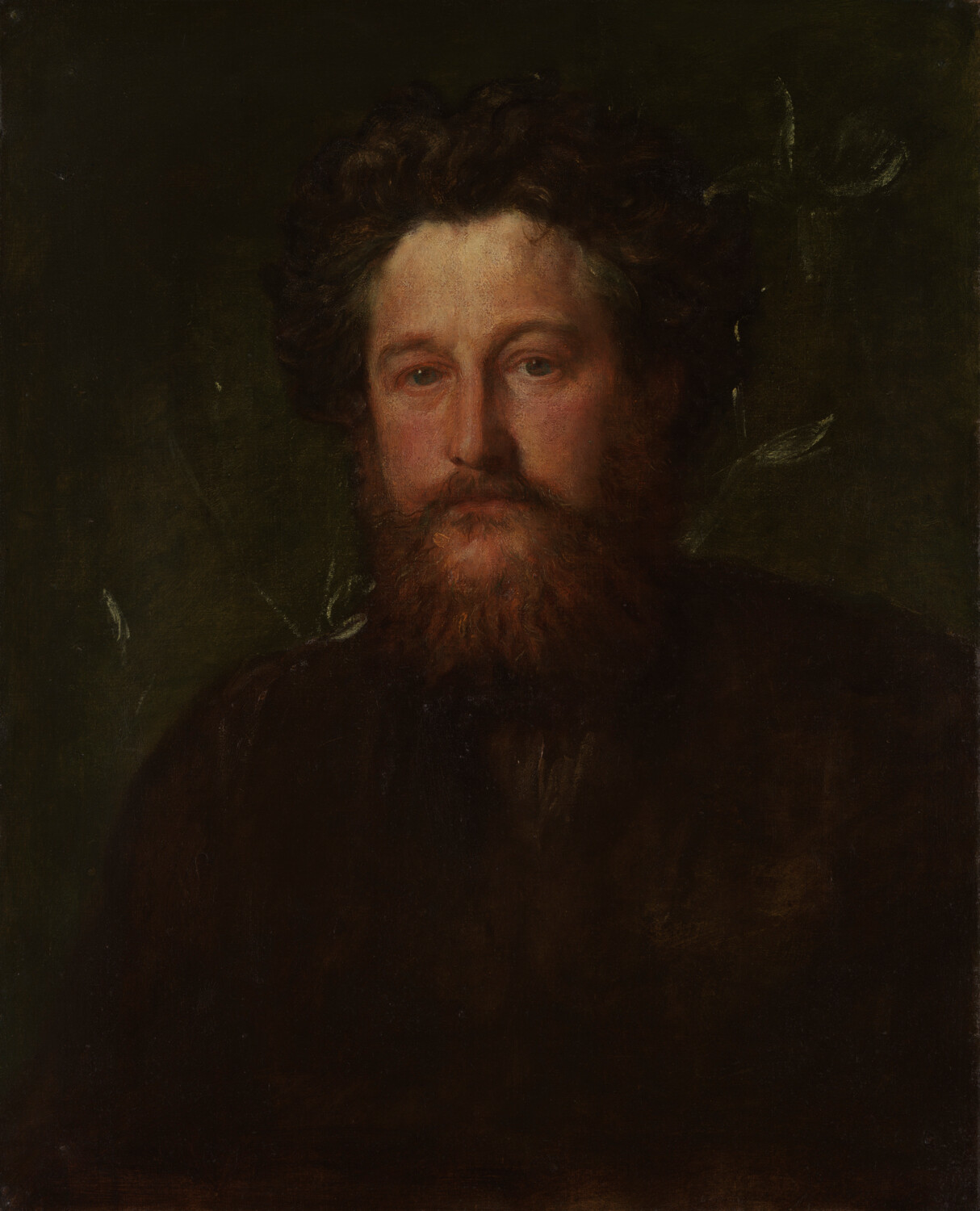
The lecture by William Morris called 'At A Picture Show. Whitechapel (1884)' by May Morris in her notes on the manuscript. Delivered on the preview day, Tuesday 8 April 1884, the lecture was hard-hitting on class, the unequal conditions of labor, the suffering of the working man, and the choice facing reformers truly committed to the structural transformation of society.
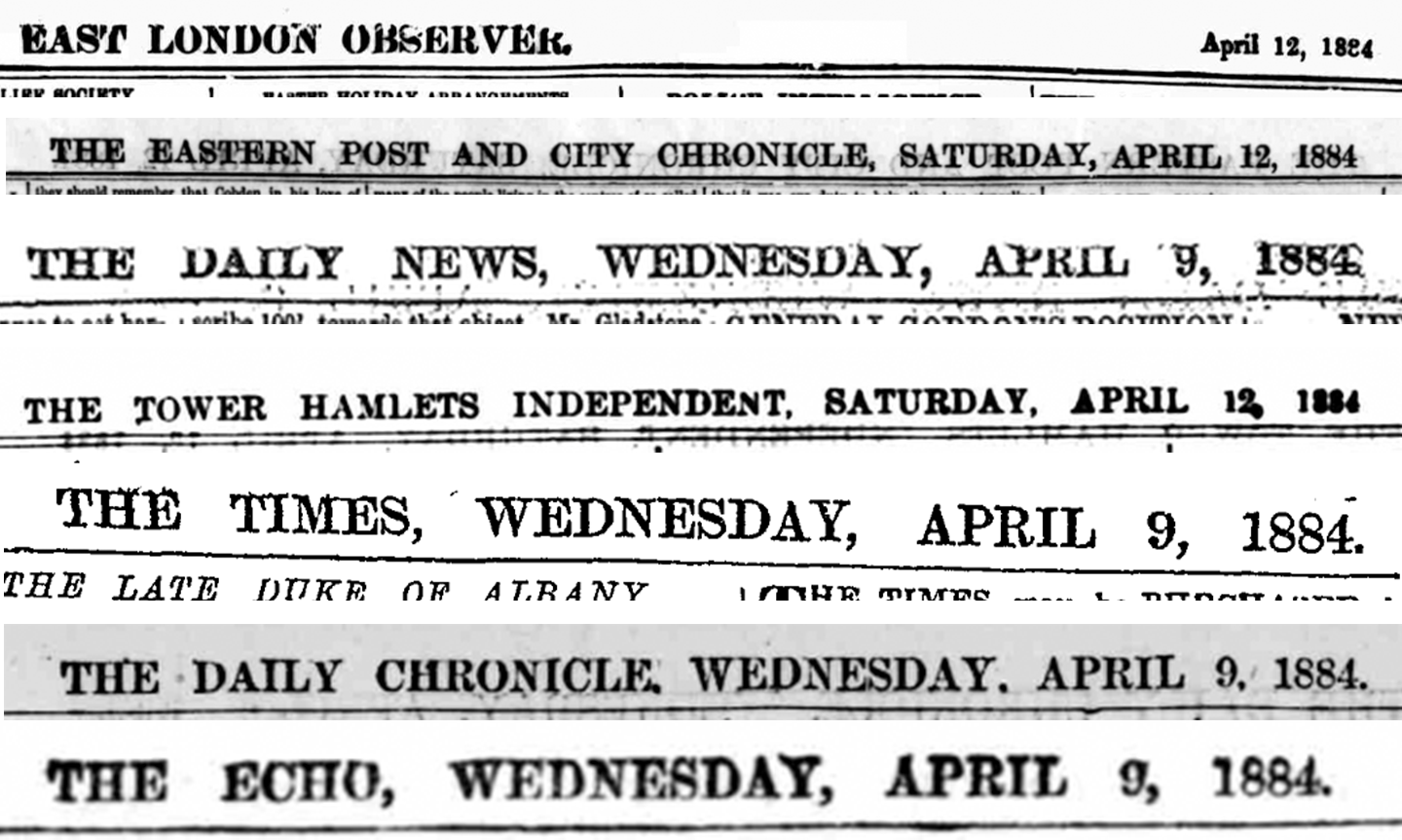
The press reports on the Exhibitions from national publications like The Times and local publications such as East London Observer, The Daily News, the The Daily Chronicle, and The Tower Hamlets Independent. For the 1884 Exhibition, there was some divergence of opinion about the opening lecture delivered by William Morris but broad agreement about the value of the project of 'pictures for the people'.
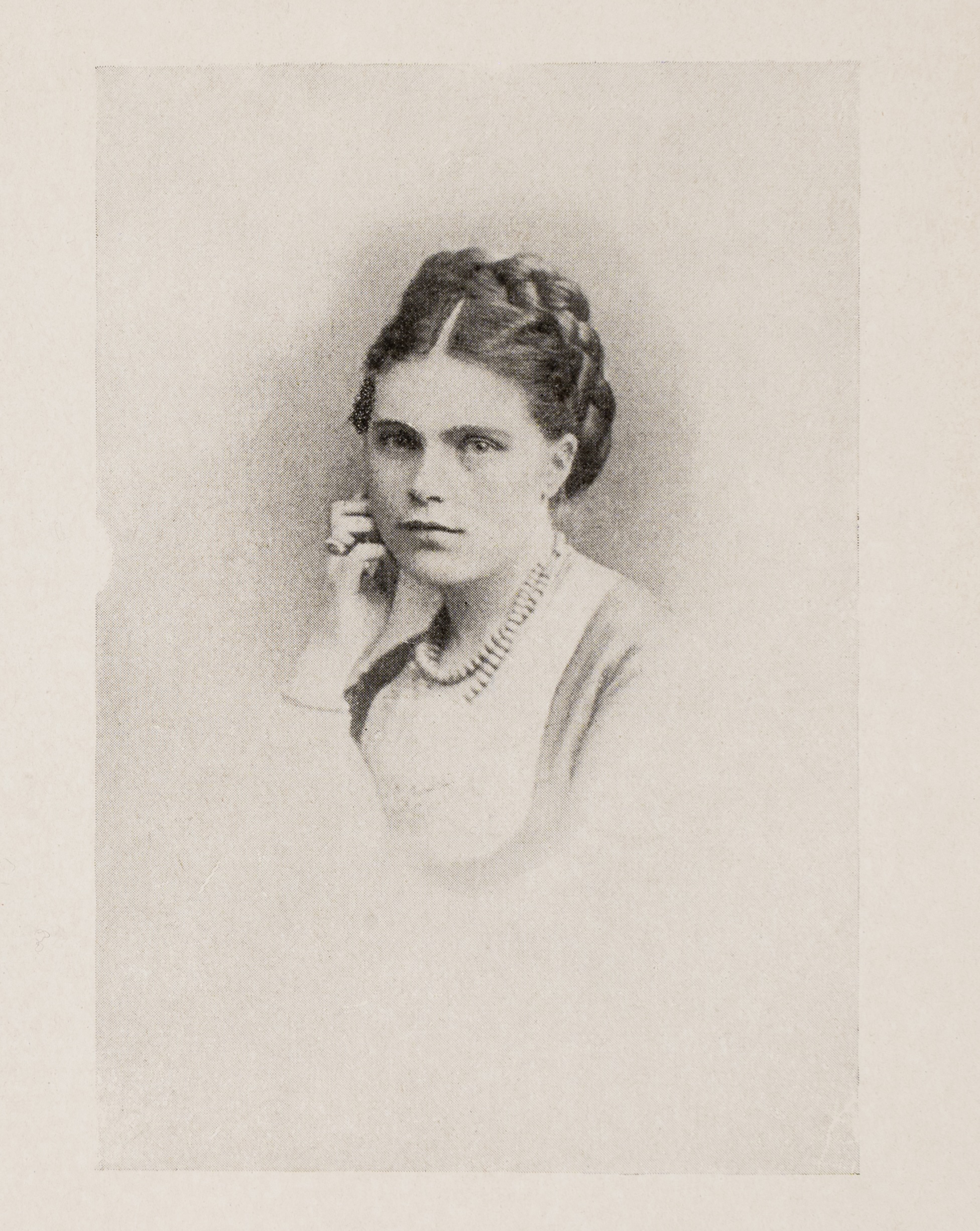
Henrietta Barnett was the historian of the Exhibitions, charting the process from idea to execution while describing the obstacles and the opportunities along the way. In ‘Pictures for the People,‘ published in The Cornhill Magazine (March 1883), she gave the first 'official' account of the Exhibitions. She later expanded the account into two chapters of her biography of Canon Barnett: His Life, Work, and Friends (1918).
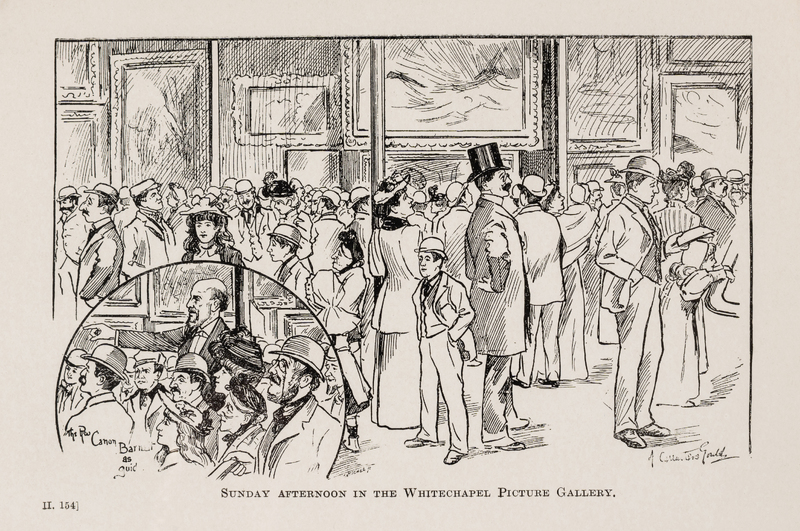
'Sunday Afternoon at the Whitechapel Picture Gallery' by Francis Carruthers Gould (above) offers another view of the Exhibitions; it was undated but included in Henrietta Barnett's biography of Canon Barnett (1918). There are also a series of sketches of the 1886 Exhibition in an article called 'At the East-End Academy,' published in The Pall Mall Gazette (28 April 1886).
The 3D Gallery and the Collection
Turning archival documents into a digital exhibition presents a challenge and an opportunity. The challenge was to reconstruct the event of the 1884 Exhibition from archival sources while the opportunity was to reimagine the experience of the Exhibition using digital technology. It was important that we paid attention to issues of access (hosting the exhibition in partnership with the Whitechapel Gallery); user experience (curating the exhibition with navigation tools for visitors to interact with the exhibition in different ways); and sustainability (building an online platform that can be updated and expanded). The result is a virtual environment consisting of two dimensions: a 3D gallery and website.
The 3D Gallery
The 3D gallery is a visual archive of works not seen together since 1884. Visitors enter the gallery from the lobby of the Whitechapel Gallery as it is in 2026 and, passing through the open doors, are transported back to 1884. We have added portraits of Samuel and Henrietta Barnett and William Morris, an advert from the East London Observer, and a quotation from John Ruskin to the lobby--and added fog at the doors to mark an atmospheric (!) transition from now to then.
The size of the 3D gallery is a scaled version of St. Jude's School. Whereas, according to Henrietta Barnett, the three rooms were 30 feet by 60 feet, dark, and dingy, the footprint of the 3D gallery has been expanded to enable visitors to view the paintings from different perspectives. We replicated the type of Albo-Carbon burners used in the Exhibition from a contemporary advertisement, and opened the windows so paintings can be viewed in different lights. We added fabric hangings to the walls using a design adapted from Morris and Company. And we added sound (footsteps, people talking, horses, church bells, and more) to simulate the experience of being in the crowded rooms of the Exhibition.
The 'hang' of the Exhibition was, by all accounts, haphazard. Paintings were often hung according to size but the catalog does not specify which paintings were in which room. As noted above, there were mistakes in the 1884 catalog. 230 paintings are listed but 235 paintings were displayed: number 56 refers to six paintings, there is a 137 and 137A, and number 152 is omitted. We have hung the paintings in roughly the numerical order of the catalog and provided a key to the paintings (see drop-down menu). Visitors can zoom into each painting and discover basic information from the catalog.
We have located 165 out of the 235 paintings from the 1884 Exhibition. Sir Frederic Leighton, John Brett, Edward Burne-Jones, Walter Crane, Kate Greenaway, C. Napier Hemy, Jozef Israëls, John Everett Millais, Marianne North, Evelyn Pickering, Briton Rivière, D. G. Rossetti, Dorothy Tennant, G. F. Watts, Sir Joshua Reynolds: these are just a few of the artists whose works are on display in the 3D gallery. In some cases, we could not find the exact painting but found an alternate by the same artist that fits the subject, the type (or genre), and/or the date as listed in the catalog. Where relevant, we have included titles of alternate paintings in square brackets.
The Collection
Each painting in the 3D Gallery has a link to the digital card catalog on this website with detailed information including: artist name in full, catalog descriptions, current location of painting, curator's notes, and alt-text (for accessibility). The digital catalog is sorted by Title as the default setting but it can be sorted by Artist, Lender, and Catalog Number (which is the option: Created). In addition, it can be searched by Artist, Year, Lender, Medium, and Catalog Page; and paintings that have not been found are also included. We have made every possible effort to check, check, and check again all the information. If any information is incorrect, please let us know as soon as possible via Contact Us.
Please note: the alt-text has been generated using alttext.ai; this is the only content on the website or the gallery for which an AI tool has been used.
The Team
Lucy Hartley
Curator and Project Director
Professor of Nineteenth-Century Literature & Culture, Department of English Language & Literature, University of Michigan
Technical Support
Joe Bauer
Research Computing Services Supervisor
Clara Elpi
Creative Designer
Maria Laitan
User Experience Designer
John Thiels
Digital Scholarship Specialist
Research Assistants
Dr. Ani Bezirdzhyan
Visiting Assistant Professor, Department of English, Kalamazoo College, MI, 2026-2027
Asa Brunet-Jailly
Ph.D. Student, Department of English Language & Literature, University of Michigan, 2024-present
Katie Ellis
B.Sc (Hons), Human Biology, University of Loughborough, U. K., 2026
Additional Contributors
Melika Rafiei
3D renders
Ruiqi Sun
Early website design