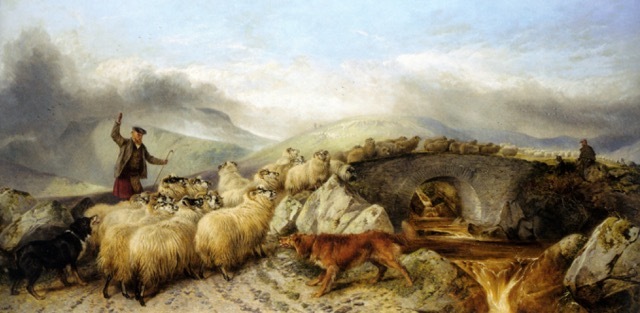
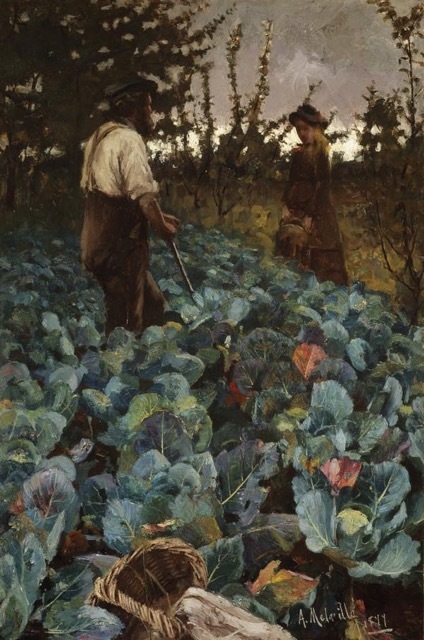
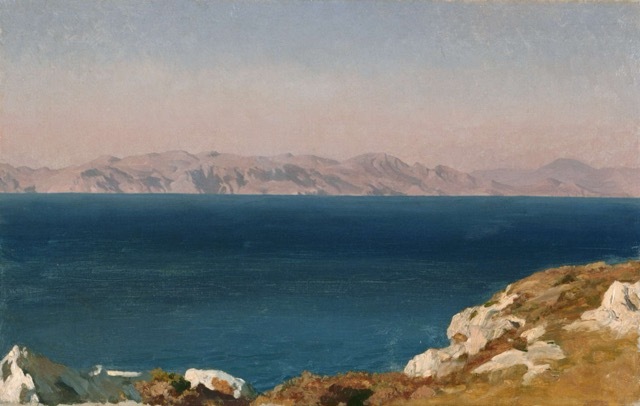
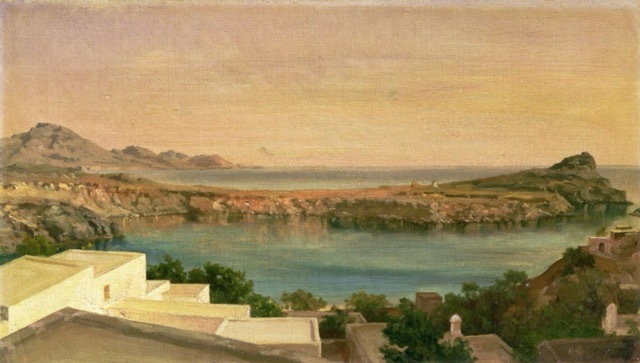
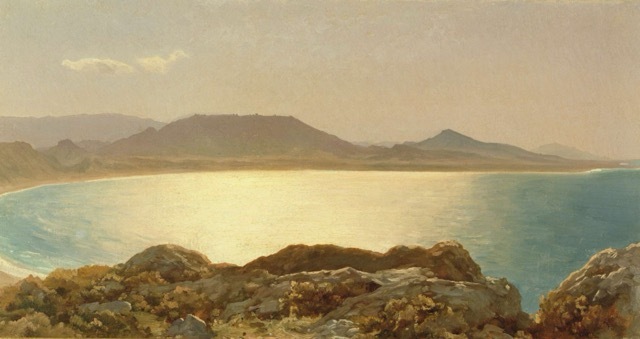
A picture in what is called the "Impressionist" school, the method of which is to transfer rapidly to the canvas the general impression of any scene. The Impressionists are thus the complete opposite of the Pre-Raphaelites, of whose work there were several good examples in last year's Exhibition, and who aim at presenting every detail with absolutel fidelity.
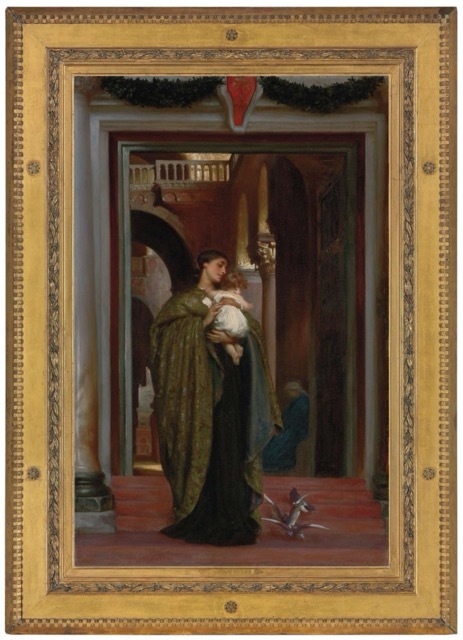
St. Jerome, who first made the great Eastern book, the Bible, legible in the West, by translating the Hebrew into Latin, was one of the chief saints of the Latin or Western Church, and was a favourite subject in Christian art. There are eleven pictures of him in the National Gallery alone.The men who help the world by study must "scorn delights and live laborious days."
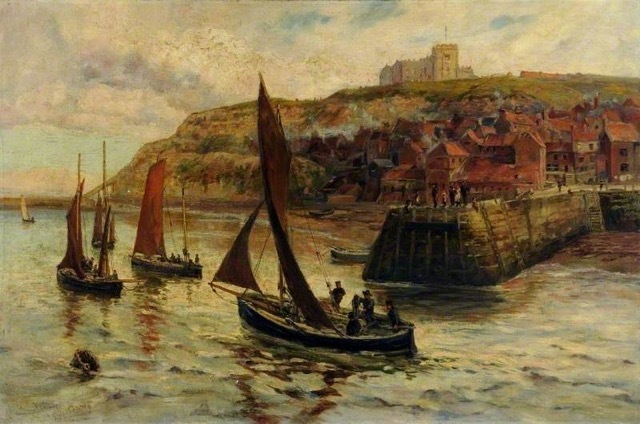
A wet sheet and a flowing sea,
A wind that follows fast,
And fills the white and rustling sail,
And bends the gallant mast.
The white waves heading high, my lads,
the good ship bright and free,--
The world of waters is our home,
And merry men are we.-- (Allan Cunningham)
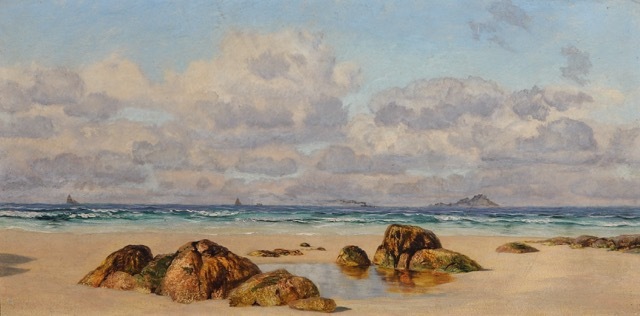
Now the great winds shoreward blow,/ Now the salt tides seaward flow;/ Now the wild white horses play,/ Champ and chafe and toss in the spray. / (Matthew Arnold).
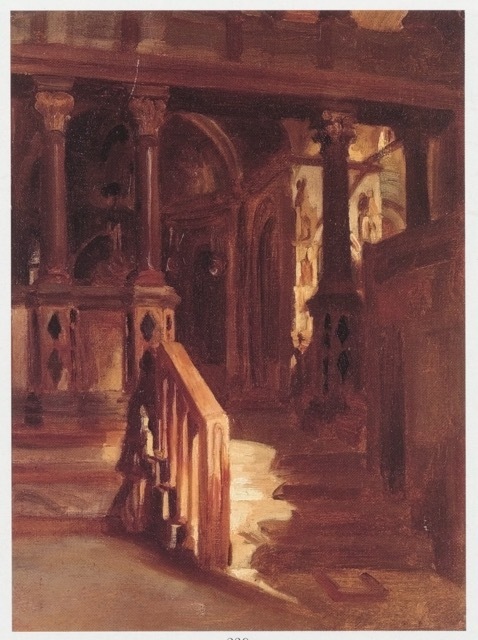
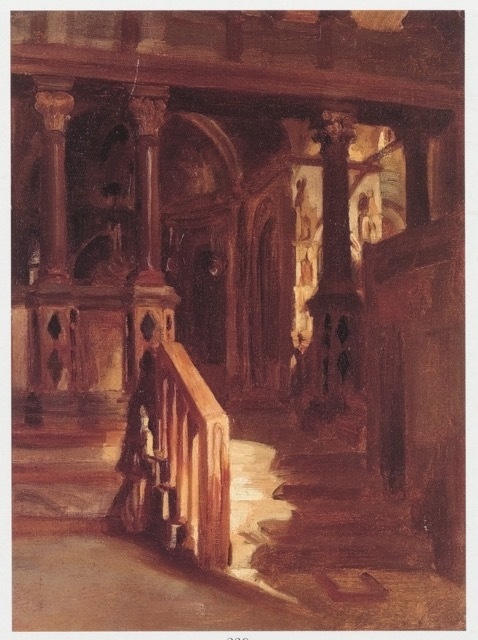
St. Mark's is the cathedral of Venice, and one of the most famous buildings in the world. the interior is thus described by Ruskin : "it is lost in deep twilight, to which the eye must be accustomed for some moments before the form of the building can be traced. Round the domes of its roof the light enters only through narrow apertures like large stars; and here and there a ray or two from some far away casement wanders into the darkness and casts a narrow phospheric stream upon the waves of marble that heave and fall in a thousand colours along the floor. What else there is of light is from torches, or silver lamps, burning ceaselessly in the recesses of the chapel; the roof sheeted with gold, and the polished walls covered with alabaster, give back at every curve and angle some feeble gleaming to the flames, and the glories, round the heads of the sculptured saints, flash out upon us as we pass them, and sink into gloom."
St. Mark's is the cathedral of Venice, and one of the most famous buildings in the world. the interior is thus described by Ruskin : "it is lost in deep twilight, to which the eye must be accustomed for some moments before the form of the building can be traced. Round the domes of its roof the light enters only through narrow apertures like large stars; and here and there a ray or two from some far away casement wanders into the darkness and casts a narrow phospheric stream upon the waves of marble that heave and fall in a thousand colours along the floor. What else there is of light is from torches, or silver lamps, burning ceaselessly in the recesses of the chapel; the roof sheeted with gold, and the polished walls covered with alabaster, give back at every curve and angle some feeble gleaming to the flames, and the glories, round the heads of the sculptured saints, flash out upon us as we pass them, and sink into gloom."
St. Mark's is the cathedral of Venice, and one of the most famous buildings in the world. the interior is thus described by Ruskin : "it is lost in deep twilight, to which the eye must be accustomed for some moments before the form of the building can be traced. Round the domes of its roof the light enters only through narrow apertures like large stars; and here and there a ray or two from some far away casement wanders into the darkness and casts a narrow phospheric stream upon the waves of marble that heave and fall in a thousand colours along the floor. What else there is of light is from torches, or silver lamps, burning ceaselessly in the recesses of the chapel; the roof sheeted with gold, and the polished walls covered with alabaster, give back at every curve and angle some feeble gleaming to the flames, and the glories, round the heads of the sculptured saints, flash out upom us as we pass them, and sink into gloom."
St. Mark's is the cathedral of Venice, and one of the most famous buildings in the world. the interior is thus described by Ruskin : "it is lost in deep twilight, to which the eye must be accustomed for some moments before the form of the building can be traced. Round the domes of its roof the light enters only through narrow apertures like large stars; and here and there a ray or two from some far away casement wanders into the darkness and casts a narrow phospheric stream upon the waves of marble that heave and fall in a thousand colours along the floor. What else there is of light is from torches, or silver lamps, burning ceaselessly in the recesses of the chapel; the roof sheeted with gold, and the polished walls covered with alabaster, give back at every curve and angle some feeble gleaming to the flames, and the glories, round the heads of the sculptured saints, flash out upon us as we pass them, and sink into gloom."
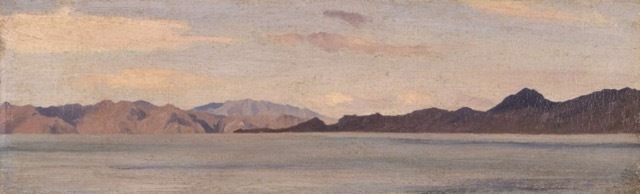
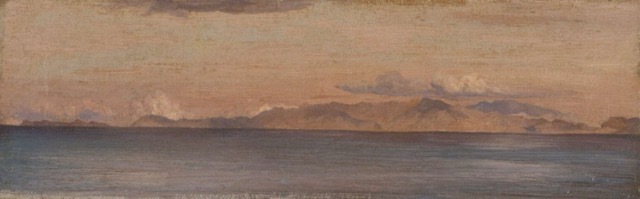
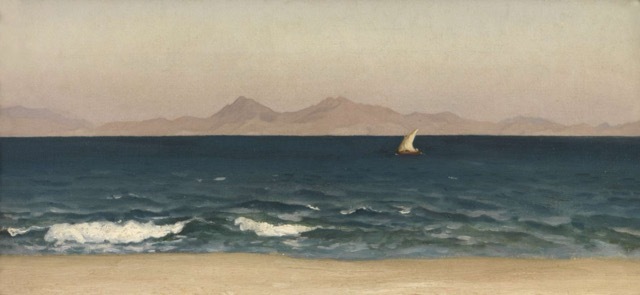
Rhodes is a Greek island in the Mediterranean, and these sketches are full of "the deep divine dark dayshine of the sea." "There the sunshine in the happy glens is fair," and Greek poets called the island "the bride of the sun." There was a fable, too, that when the gods made division of the earth among them, the sun-god did not obtain his portion; and when the other gods were for casting lots afresh, he suffered them not, for he said that, beneaht the hoary sea he saw a certain land waxing from its root in the earth, which should bring forth food for many men, and rejoice in flocks, and that he wanted this for his portion. And the gods granted him his wish, and in the end there spraing up from the sea the Island of Rhodes.
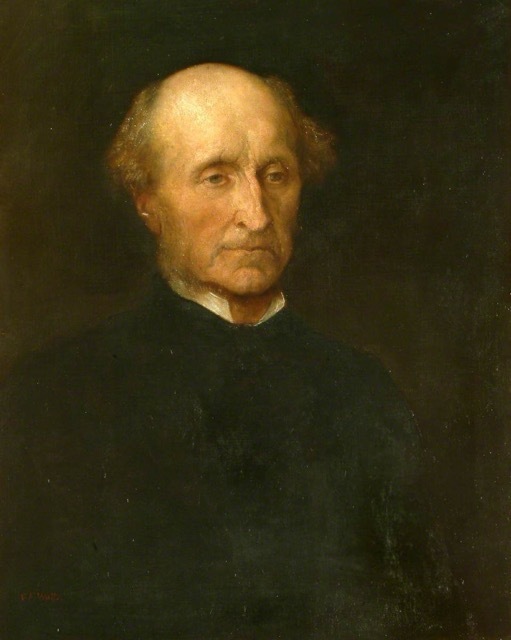
John Stuart Mill, who died in 1873, and of whom there is a memorial statue on the Thames Embankment close to Blackfriars Bridge, was the greatest English writer of his time on logic, political economy and politics. In 1865, he gave up, as he said, his "tranquil and retired existence as a writer of books, for the less congenial occupation of a Member of the House of Commons," and was returned to Parliament by the working men of Westminster. Like all great portraits, this picture shows the character as well as the features of the man -- his clear and incisive intellect, his broad and keen observation, his strong memory, and his latent stores of tenderness.
[Landells was an artist and correspondent on the Illustrated London News. He died in 1882.] / Well worth a ride in a penny steamer to see. Chelsea/ still helps us to/ Forget six centuries over hung with smoke,/ Forget the snorting steam and piston stroke,/ Forget the spreading of the hideous town;/ And to/ Think rather of the pack-horse on the down,/ And dream of London, small and white and clean,/ The clean Thames bordered by its gardens green./ W. Morris. // On the right of the picture as you look is Cheyne-row, where and in the adjoining Cheyne-walk, so many celebrated persons have lived--Carlyle, George Eliot, and D. G. Rossett.
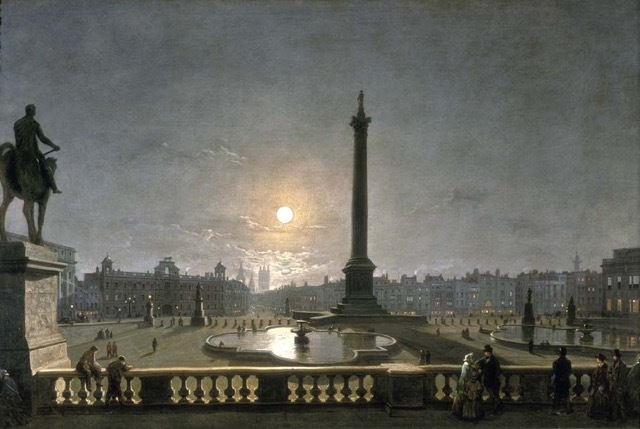
Old Northumberland House on the south side of Trafalgar square was pulled down a few years ago to make Northumberland Avenue, the new road leading from the square to the Embankment.
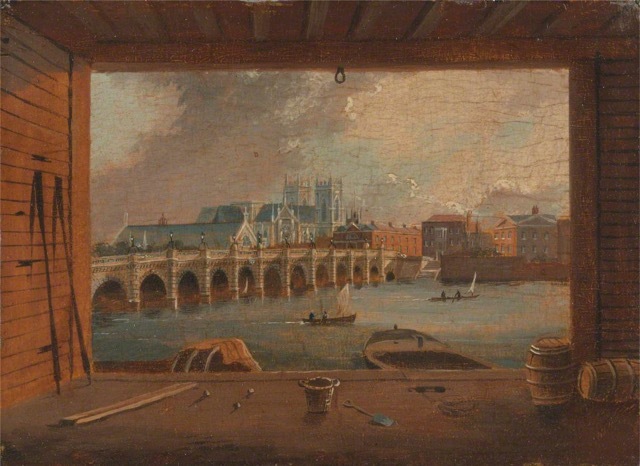
It was of old London, such as is shown in this picture, that Wordsworth wrote his sonnet "On Westminster Bridge:"/ Earth has not anything to show more fair;/ Dull would he be of soul who could pass by/ A sight so touching in its majesty./ Much of old London is still left, and much has since been added which is beautiful: but why are we not more careful to see that works of utility should also be made beautiful? The Charing Cross Railway Bridge is hardly "a sight so touching in its majesty."