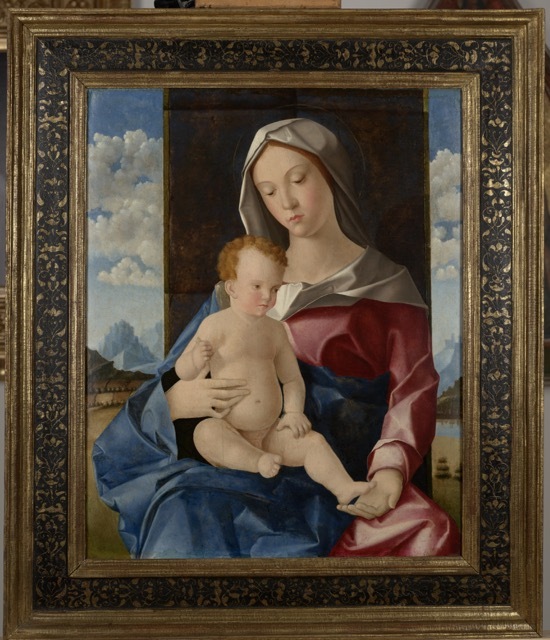
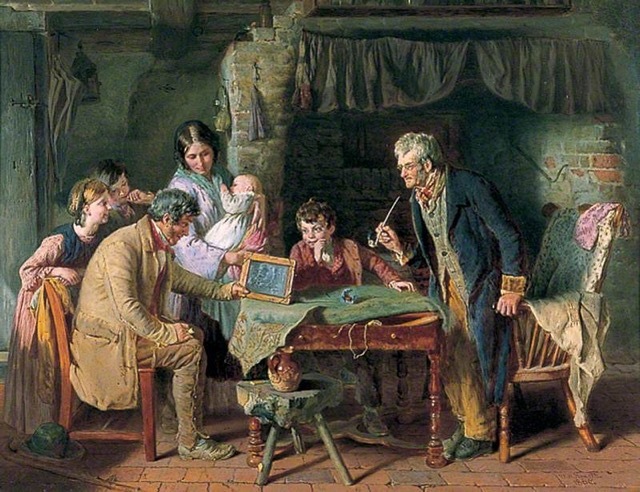
A picture painted when life was so simple that a representation of a well-known home helped men understand God. The great masters painted the Virgin and Child in likeness of the people they knew; in their eyes every home had the possibility of the highest.
A picture of what our children's playgrounds ought to be. "The Children are blissful, just in the degree that they are natural; and the fairyland she creates for you is not beyond the sky nor beneath the sea, but nigh you, even at your doors. She does but shew you how to see it, and how to cherish." --Ruskin.
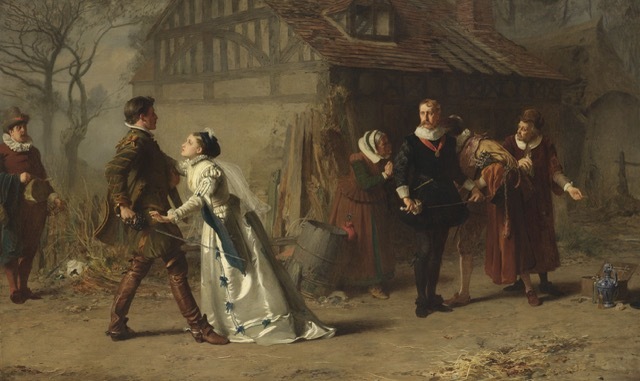
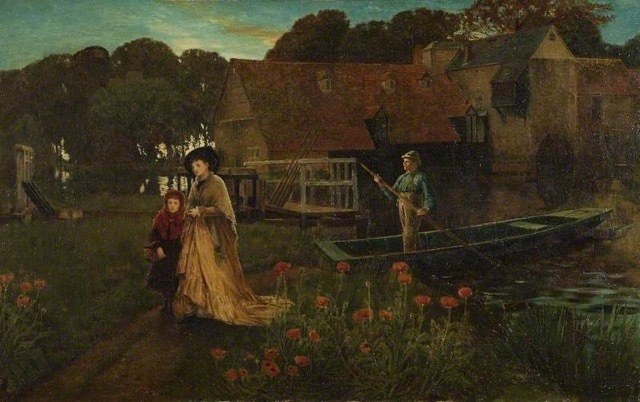
Flowers bloom where men have fought and bled. ("I sometimes think that never blows so red The rose as were some buried Caesar bled.") But to the mourner there is still sorrow in the air.
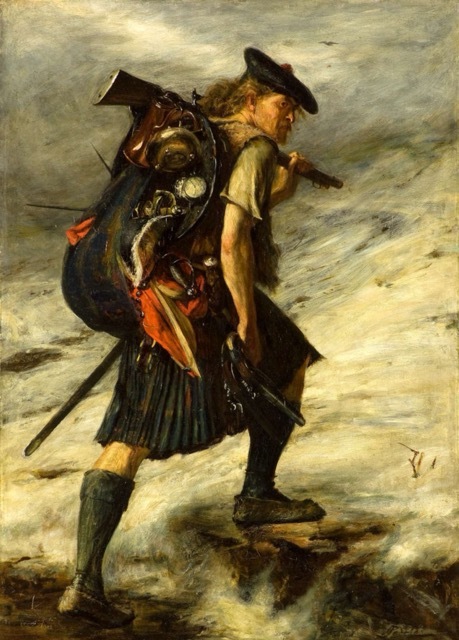
The friends of the Stuarts rose against the Georges in 1745. This portrait shows how, to some, it was a hard duty to fight against fellow-countrymen, and how full of danger the fight was.
An ironmonger's, a carpet dealers's, and a drapers's shop in a Cairo street. Business men there live for other things than money-making; they busy themselves with living, as well as with obtaining a livelihood. They enjoy the beautiful things they sell, and sometimes take, as well as pursue, repose.
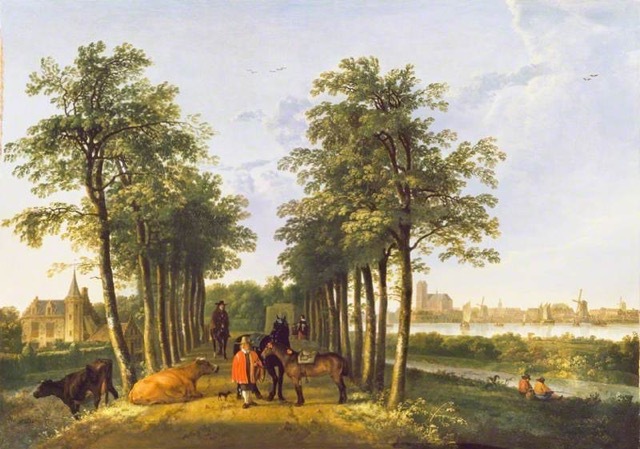
Cuyp, who was a brewer by trade, was a Dutch artist (A.D. 1605-1691), especially good at painting sunlight, "the best that Holland's sun can show." There are several of his pictures in the National Gallery.
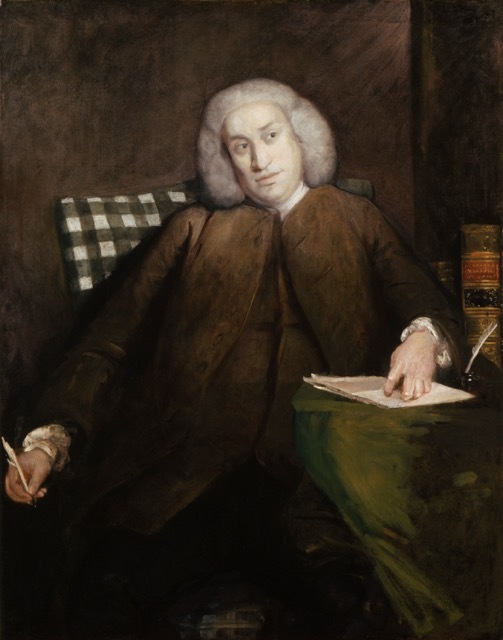
Samuel Johnson is one of the great names in English literary history ; but his celebrity depends not so much on his Dictionary or other works, as on the record of his life and table talk by Boswell. The portraits of him show his rough exterior; but as Goldsmith said of him, he had "nothing of the bear but his skin," and he was one of the kindest as well as the most celebrated men of his time.
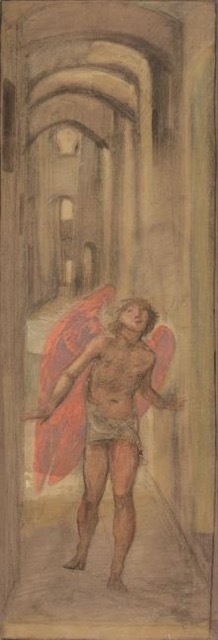
(Water Colour drawing, 1862.)
Love as a pilgrim is holding in his right hand an arrow, wherewith he is feeling his way along the street.
"Love looks not with the eyes but with the mind,
And therefore is winged Cupid painted blind." --Shakespeare.
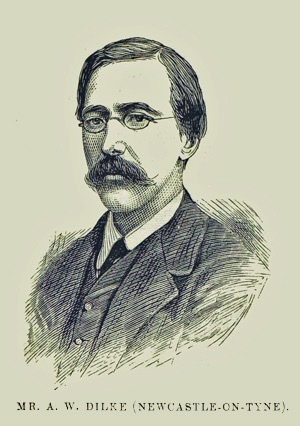
Mr. Ashton Dilke, younger brother of Sir Charles Dilke, was M.P. for Newcastle from 1880 to 1883 when he died. He was also proprietor of the Weekly Dispatch.
Oedipus was King of Thebes and did a great wrong unwittingly. And when he learned the truth, with his own hands he tore out his eyes, for that "it was not fit that the eyes which had seen such things should ever look upon the sun again." And not long after Oedipus was driven forth in wretchedness and beggary, and his daughter Antigone led him by the hand, and sought to cheer him in his agony. She
' Leads the old man through many a wild wood path,
' Hungry and footsore, threading on her way ;
' And many a storm, and many a scorching sun
' Bravely she bears, and little recks of home,
' So that her father finds his daily bread.'
And the story goes on to tell of the healing virtue of love ; for in the end the furies of remorse are turned into the kindly Goddesses of forgiveness, and Oedipus is received up into heaven.
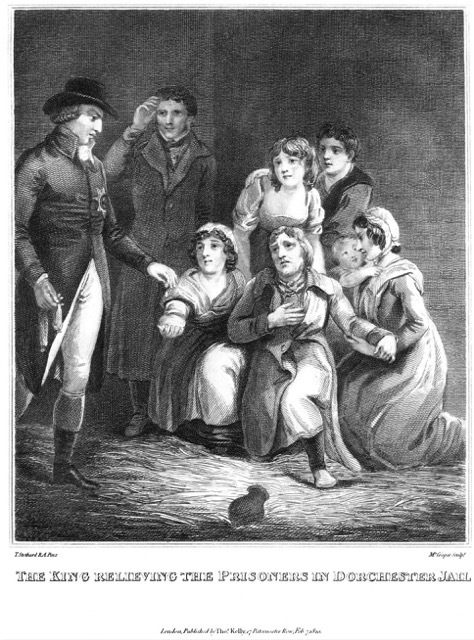
The story is told of George IV., when Prince of Wales, hearing of any officer's family in distress; straightway borrowing six or eight hundred pounds, and in disguise carrying the money to the starving family.
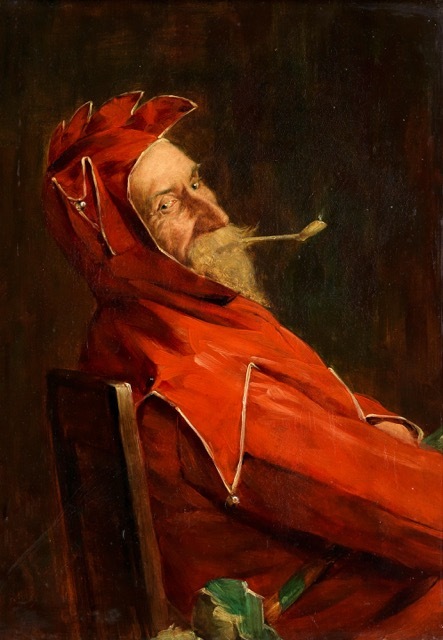
His legs are fettered but his mind is free, and he still fancies himself in old scenes making others merry.
Stone walls do not a prison make,
Nor iron bars a cage.-- Lovelace
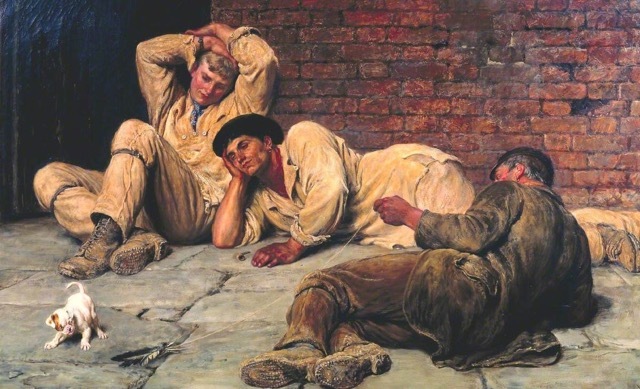
The giants find a playmate in the puppy, and forget the weariness of work in watching the little creature's fear and fierceness. What else are giants themselves than puppies, in the eyes of those larger giants whose glory it is "to have a giant's strength," but never "to use it like a giant?"