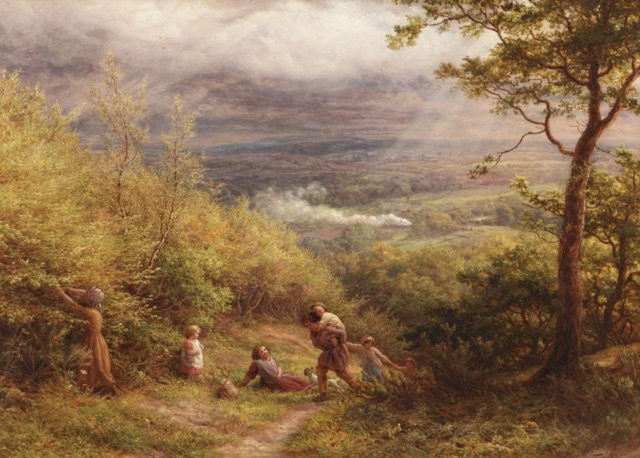
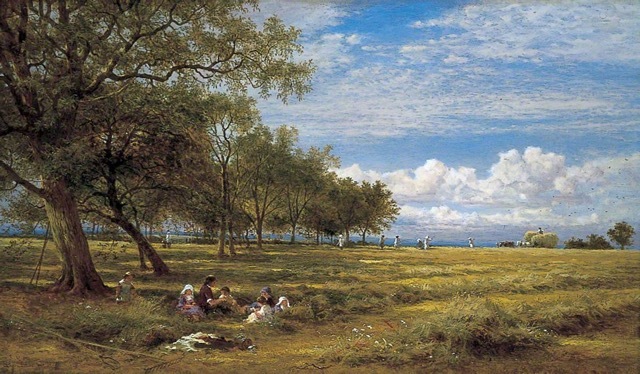
"It is a beauteous evening, calm and free;
The holy time is quiet as a nun
Breathless with adoration; the broad sun
Is sinking down in its tranquility." --Wordsworth
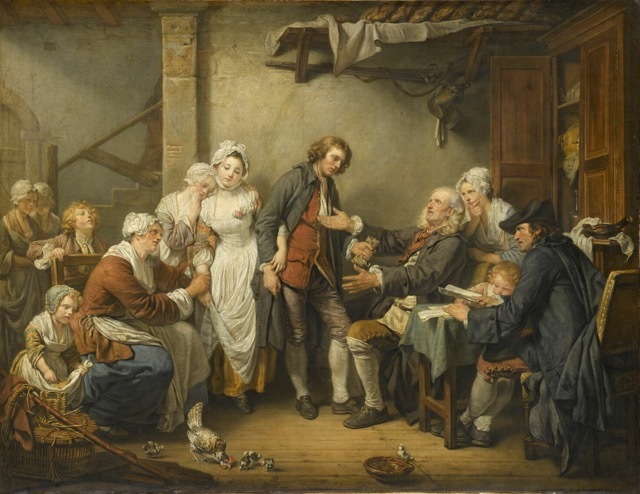
The scene is in France, where a betrothal is as binding as a marriage itself. The young couple are engaging themselves in presence of the lawyer and their friends.
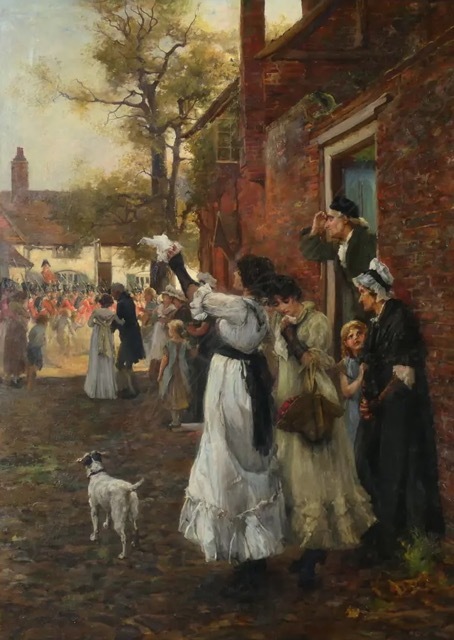
In the times of the wars against Napoleon. The regiment is passing through a village which was the old home of some of the men. The friends show their grief in different ways, and some who show least feel most.
War's a game, which, were their subjects wise,
Kings should not play.--Cowper.
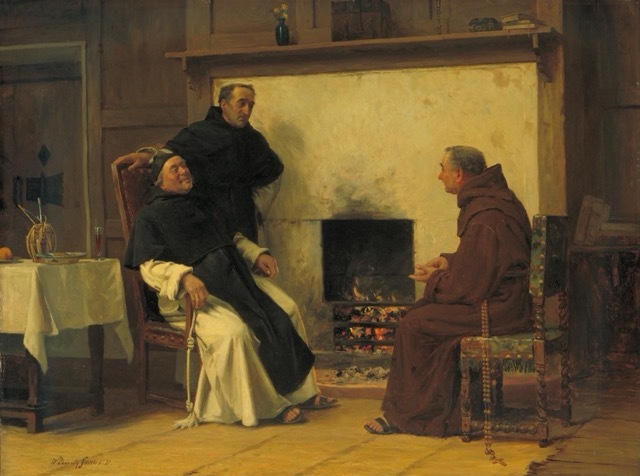
The monks are being armed against the enemies of the church, and Cardinal de Guise is looking on and conversing with the officers. The monks seem to be poor recruits, and make an awkward squad. For some of them life has been so empty that even danger cannot arouse them; and there are others whole "warfare is not of this world," and who have found much in life that is not to be won by fighting.
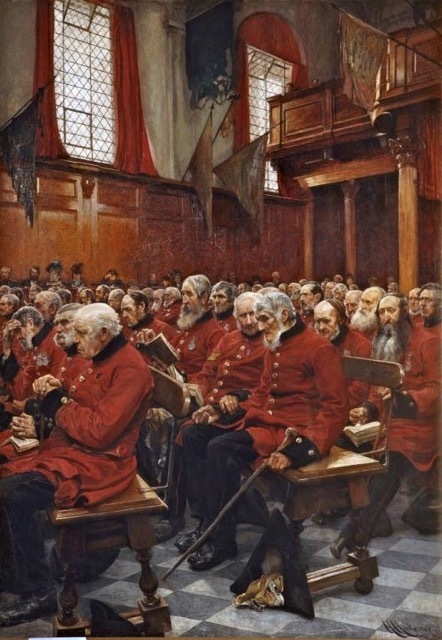
Every face tells its tale of the past, and the one at the end of the second row may tell of the future, for he is resting in the sleep of death. "Yonder sits some three-score pensioners of the hospital, listening to the prayers and psalms. It is a scene of age and early memories, and pompous death. How solemn the well remembered prayers are: 'The steps of a good man are ordered by the Lord: and he delghteth in his way.'"--(Thackeray.)
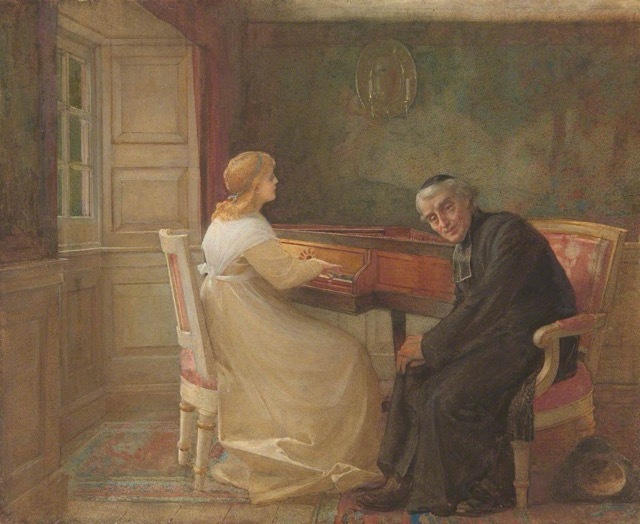
The tale has as many meanings as it has hearers. The monk who loves his ease finds something to make him laugh; the other finds something to make him sad.
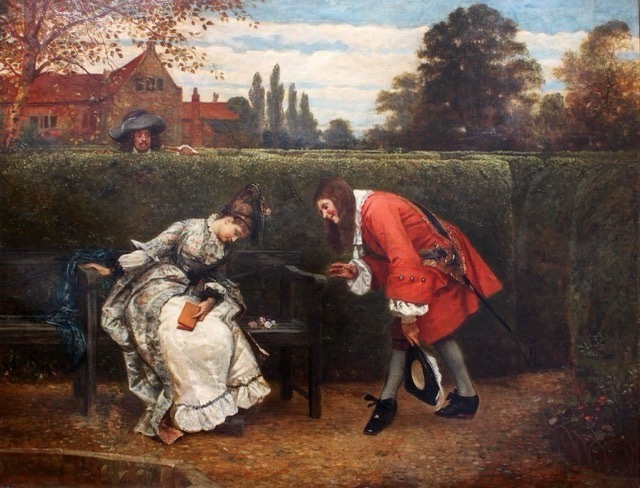
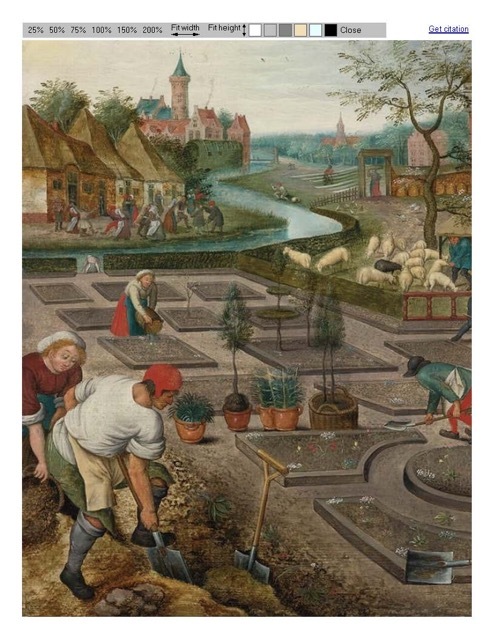
There were mazes such as the one at Hampton Court, in most old fashioned gardens. The lover behind has lost his way and is listening to his rival's success.
Breughel [sic] was a Dutch artist, A.D.1510-1570. The gardens of the people, and the artist's manner of painting them are equally stiff, prim, and formal.
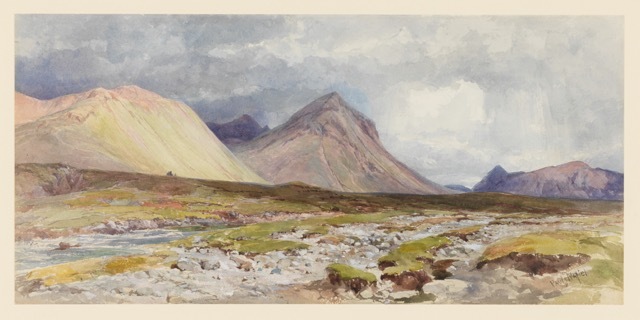
"The feeding of the rivers and the purifying of the plains the least of the services appointed to the hills. To fill the thirst of the human heart for the beauty of God's working to startle its lethargy with the deep and pure agitation of astonishment, --are their higher missions."
Ruskin.
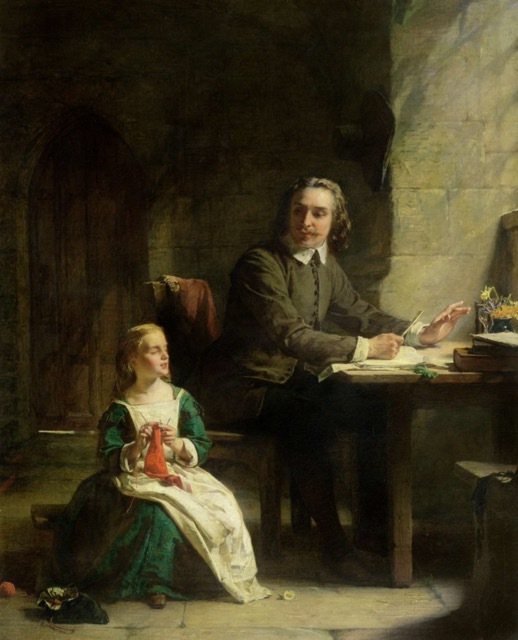
Tyndale lived for a time with a London alderman, and studied most part of the day at his book, and "would eat but sodden meat by his good will, and drink but small single beer." The book at which he studied was the Bible. But the translation of the Bible into English was not to be done in England, and to avoid persecution Tyndale had to fly to Germany. He finished the New Testament there in 1525, and in 1526 six thousand copies of the New Testament in English were sent over to England.