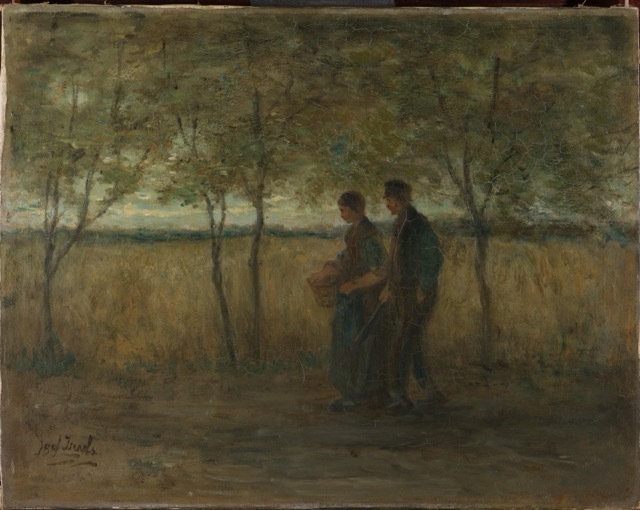
The grass is poor and the sky dull and heavy with coming rain, and there would be nothing to break the sadness of the picture if it were not that the boy's face is thoughtful and suggests that he can see above "the dull flats of earth" to the ;ine of blue sky in the distance. // The warm sun is failing, the bleak wind is wailing, / The abre boughs are sighing, the pale flowers are dying,/ And the year / On the earth her death-bed, in a shroud of leaves dead, / Is lying. / Come months, come away,/ From november to May,/ In your saddest array;/ Follow the bier/ Of the dead cold year,/ And like dim shadows watch by her sepulchre.--(P. B. Shelley).
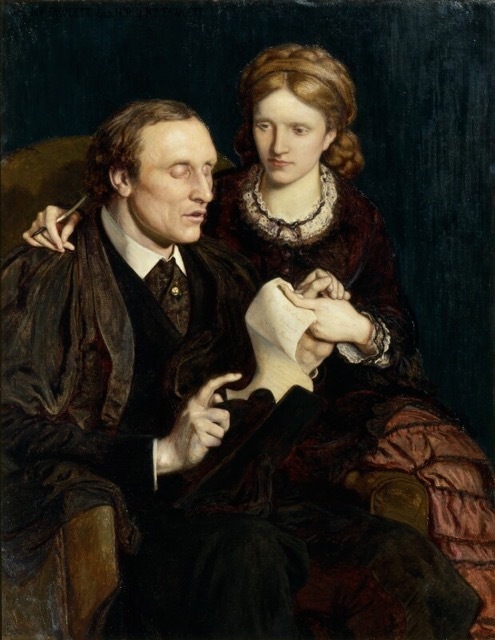
This is a portrait of the great grandson of Captain Harvey, who commanded the "Fighting temeraire," (of which there is so beautiful a picture by Turner in the National Gallery) at the Battle of Trafalgar. The telescope is painted from the actual telescope used in the battle.
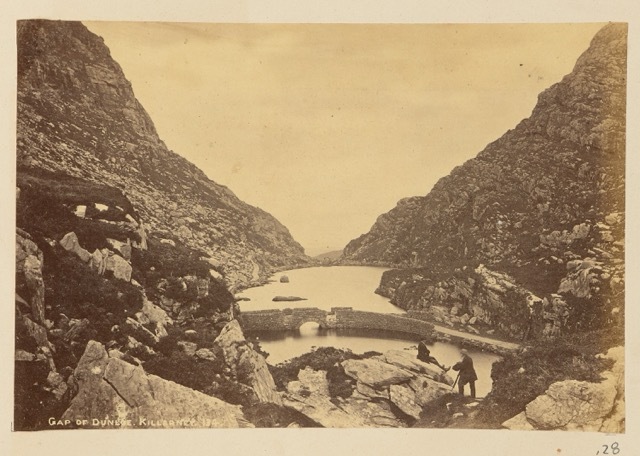
Evening in an Irish valley. The shepherds have all gone to their cabins, and no sound but that of the torrent breaks "the everlasting silence of the hills."
In Venice, where there are no streets but only canals, boats, or "gondolas," take the place of cabs. The gondolier on the right is stopping on his way to talk to his wife and child at the window, and the girls on the left are enjoying a gossip over their water carrying. The Venetians are as bright and sunny as their city.
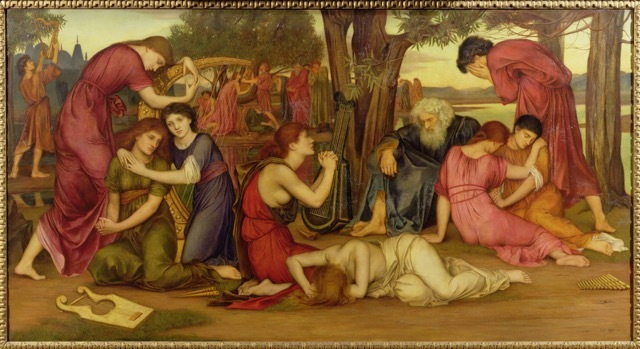
As the evening hour of prayer draws on, the Jews in exile at Babylon remember their fatherland. "By the rivers of Babylon, there we sat down; yea, we wept, when we remember Zion. We hanged our harps upon the willows in the midst thereof."
Common land leads to a common life. The passing traveller stops to chat with the knot of laborers, and even the dogs and cows seems to share in the good fellowship. There are no enclosures, and the villagers set no fences between one another.
An Egyptian fish market: "Odd fish" to sell, and "odd fish" to buy. "All sorts and conditions of men" are a-marketing together--the grand lady, the beggar, the donkey-boy--but each face has a character of its own.
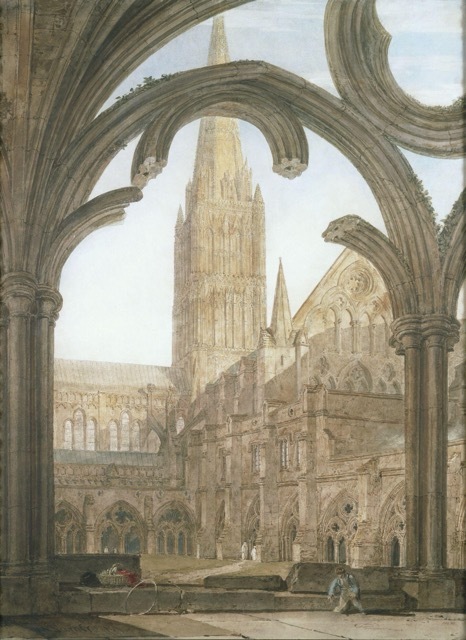
“‘Walk to the west front, and there stand for a time, looking up at its deep-pointed porches and the dark places between their pillars, where there were statues once, and where fragments, here and there, of a stately figure, are still left, which has in it the likeness of a king, perhaps, indeed, a king on earth, perhaps a saintly king long ago in heaven; and so higher and higher, up to the great mouldering wall of rugged sculpture and confused arcades, shattered and grey, and grisly with heads of dragons and mocking fiends, worn by the rain, and sometimes formed into yet unseemlier shapes, and coloured on their stony scales by the deep russet-orange lichen, melancholy gold: and so, higher still, to the bleak towers, so far above, that the eye loses itself among the bosses of their traceries, though they are rude and strong, and only sees like a drift of eddying black points the crowd of restless birds."--Ruskin.
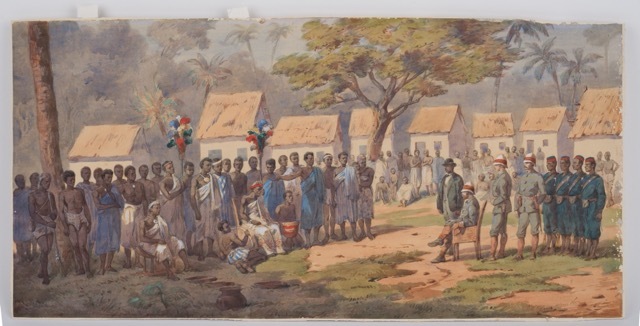
At these conferences the kings sometimes appeared with a certain amount of state, accompanied by numerous attendants carrying bunches of coloured ostrich feathers, drums, and umbrellas, and the attendants wore plaques of gold on their breasts, and other ornaments. In the discussion, the king was usually represented by one of his councillors, or linguist, who, after consultation with the rest, spoke for him. This and the preceding picture are from sketches made by the late Sir G. Colley.
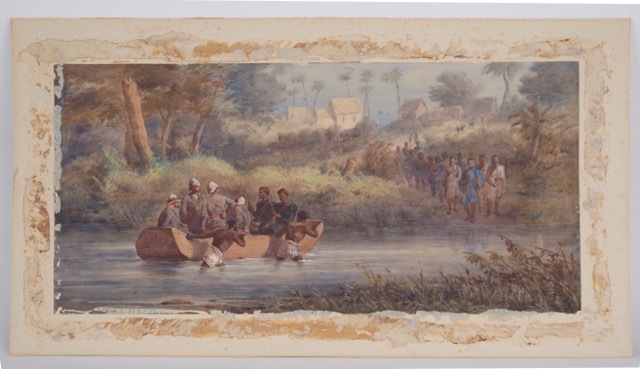
Officers were sent to all the tribes of the protectorate to raise men, collect carriers, and try and rouse our so-called "native allies" to action. As a rule they were well received, and everything was promised, though nothing was done. This sketch represents the arrival of English officers at a village on the Amissa, which river was crossed in a canoe made of the hollowed trunk of a tree.
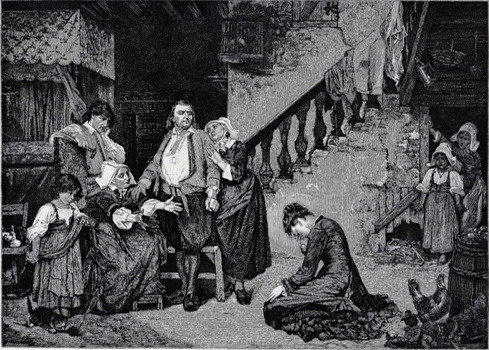
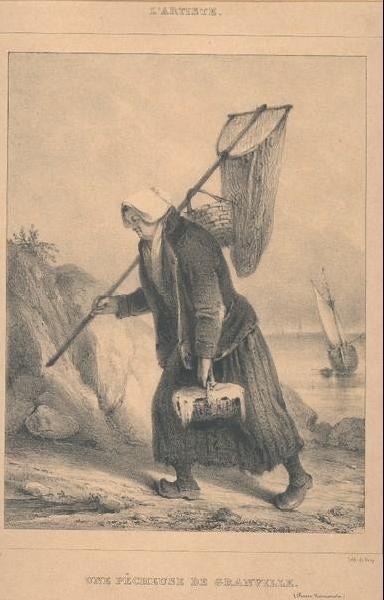
The Breton peasant girls all wear the same national dress, and it is a point of honour with them to have "best clothes" for Sundays and feast days. The girl has on her smartest collars and cap, but“ her eyes are with her heart and that is far away.”
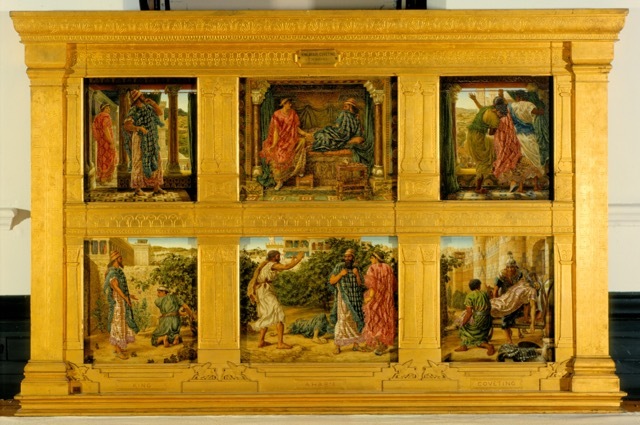
1. King Ahab covets Naboth's vineyard. 2. Naboth refuses to sell it. 3. Jezebel says she can get it. 4. Elijah threatens Ahab with punishment for killing Naboth and taking his land. 5. Ahab brought home dead from battle. 6. Jezebel is being thrown out of the window.
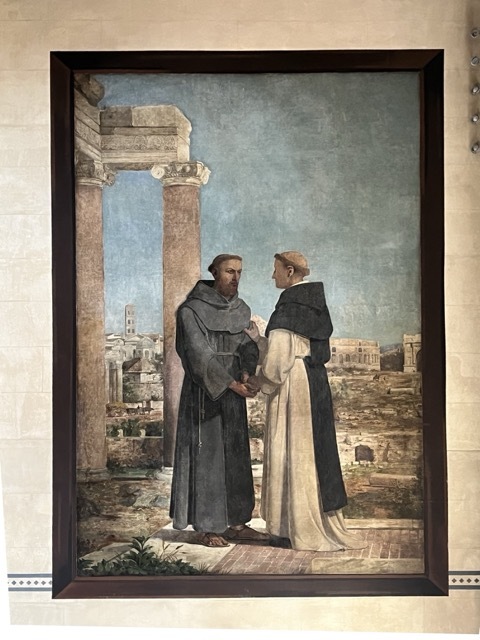
St. Francis and St. Dominic were the two great religious reformers of the thirteenth century--St. Francis, who taught Christian men how they should behave, St. Dominic, who taught them what they should think. Each sent his little company of disciplines, or friars, to teach and preach in all Christian lands, England among the rest; and the memory of the Black Friars of St. Dominic and the Grey Friars of St. Francis survives in the names Blackfriars' Bridge and Whitefriars. The artist here shows us the meeting of the two saints amongst the ruins of ancient Rome, the Apostle of Works and the Apostle of Faith shaking hands: "There are diversities of gifts, but it is the same spirit."